The number of individuals attempting to stowaway onboard vessels is slowly increasing. A Britannia P&I Club webinar discussed how to be prepared, what to do, and what is covered under P&I insurance.
The nationalities with the most stowaways are Ghana, Nigeria and Tanzania, said Simon Rapley, Divisional Director – Loss Prevention with Britannia P&I, speaking at a Britannia P&I Club webinar on Feb 28. There is a slow decline in the number of stowaways from many West African countries, including Ghana, Nigeria, Cameroon and Ivory Coast, he said. “IMO has done a number of workshops in West Africa to reduce the number of stowaway incidents and it’s working to a degree.”
Tanzanian nationality stowaways often board vessels in South Africa, in particular Durban, he said.
The International Group of P+I clubs collect figures on stowaways every four years, and the latest available is for 2017. These show that the number of incidents is gradually declining, although the number of individuals involved is going up, so more people per incident.
The IMO also collects data, but the International Group’s figures are around 1 Ox higher, showing that IMO must be missing many incidents, he said.
In data from Britannia customers, where it can access more detail, there are a high number of incidents in West Africa where Lagos and Port Harcourt have particular prominence. Also South Africa, Kenya, Morocco and Spain, he said.
Ports in Northern Europe are starting to feature more prominently in the data of places where stowaways try to get onboard, including on ro-ro vessels.
In Britannia’s data, the number of cases per year is “generally trending downwards”, but still at 50-60 cases per year, and on average 2 to 2.5 people per case, he said.
Getting onboard and hiding
“A stowaway doesn’t care if it is a container ship or tanker. If a vessel is going from Lagos they don’t care where it is going, they just want a way out,” Mr Rapley said.
The easiest way to board the vessel is up the gangway or ladder. Some climb mooring ropes and anchor chains, or get onboard inside box containers loaded by crane.
There have been cases of vessel security guards and stevedores themselves becoming stowaways.
Stowaways then need to hide, at least until the vessel departs and has gone too far to want to turn back. People may hide onboard in cargo holds on dry bulk vessels, or empty containers on container ships. They can
hide inside cranes or inside lifeboats. “Now we have fully enclosed lifeboats, who is checking [if anyone is inside]? Not normally anyone,” he said.
“One particularly favourable place to hide is the void space around the rudder trunk,” he said. “You can get quite a considerable number of persons in that area.”
Mr Rapley showed a video taken from a vessel deck, looking at the water, where a small boat passed below the rudder of a ship and a number of men jumped out of the rudder space into the boat. The ship crew had been aware that they were there, so the men went to find another ship.
People have also hidden in store rooms, the engine room, inside the funnel, in crew accommodation, in chain lockers and rope storage bins, and behind panels in accommodation.
The chain locker storage room is a particularly dangerous space, because the rusting of the chain can deplete oxygen in the air, he said.
The largest number of stowaways Britannia P&I has seen on one vessel is 23.
Typically, stowaways will make themselves known to crew within a day of the vessel’s departure, Mr Rapley said. They will not typically take food and drink with them, so will get hungry and thirsty. “
In one case, a product tanker departing from Lagos, a crew member heard a knocking sound coming from a space above the rudder. He opened a manhole, and 15 stowaways came out.
Preventative measures
Britannia recommends three security guards are employed at the wharf to guard the vessel, one by the bow, one by the stem, and one at the accommodation ladder. It can be useful to have your vessel security access controls at the bottom of the accommodation ladder rather than at the top.
You should lift the accommodation ladder or gangway when it is not in use, and not leave rope ladders unattended, he said.
“We recommend you fit a metal grill around the rudder trunk, weld it in place,” he said. Although there have been cases of stowaways using battery powered angle grinders to cut through this grating.
You can fit rat guards on mooring ropes which prevent people climbing up them. These are very difficult to remove, he said. You can fit anchor hawse pipe covers, so they cannot get into the vessel after climbing the anchor chain.
Overside lighting will make it easier to see small boats coming to the side of the ship.
Onboard, you should only have one doorway providing access into the accommodation from the main deck, although ensure other doors can be opened from the inside.
Empty spaces, such as stores and chain lockers, can be locked.
You should do a thorough search for stowaways before departure. In one case, a vessel had 20 stowaways, who were moving around the ship to avoid being spotted by the crewmember looking for them. In some ports, including in South Africa, you can hire security guards with dogs, which prove very good at sniffing out stowaways, he said.
Regulations
At IMO, there are amendments to the stowaway regulations coming into force in 2024, covering limits to payments to stowaways, and spreading the word about attempts to board.
The regulation’s full name is The Convention on Facilitation of International Maritime Traffic” (the F AL Convention), originally from 1965 but with many amendments since.
The amendments coming into force in 2024 state that stowaways should not be given any financial payments or other benefits “beyond the minimal requirements to ensure the security, general health, welfare and safety of the stowaways while on board or on shore”, because “that might act as an incentive to reoffend or as an encouragement to other persons attempting to stow away onboard ships.”
Another amendment is a recommendation that all cases of stowaways detected in port attempting to join a ship should be reported to the appropriate port authorities, who should inform all nearby ships.
Refugees
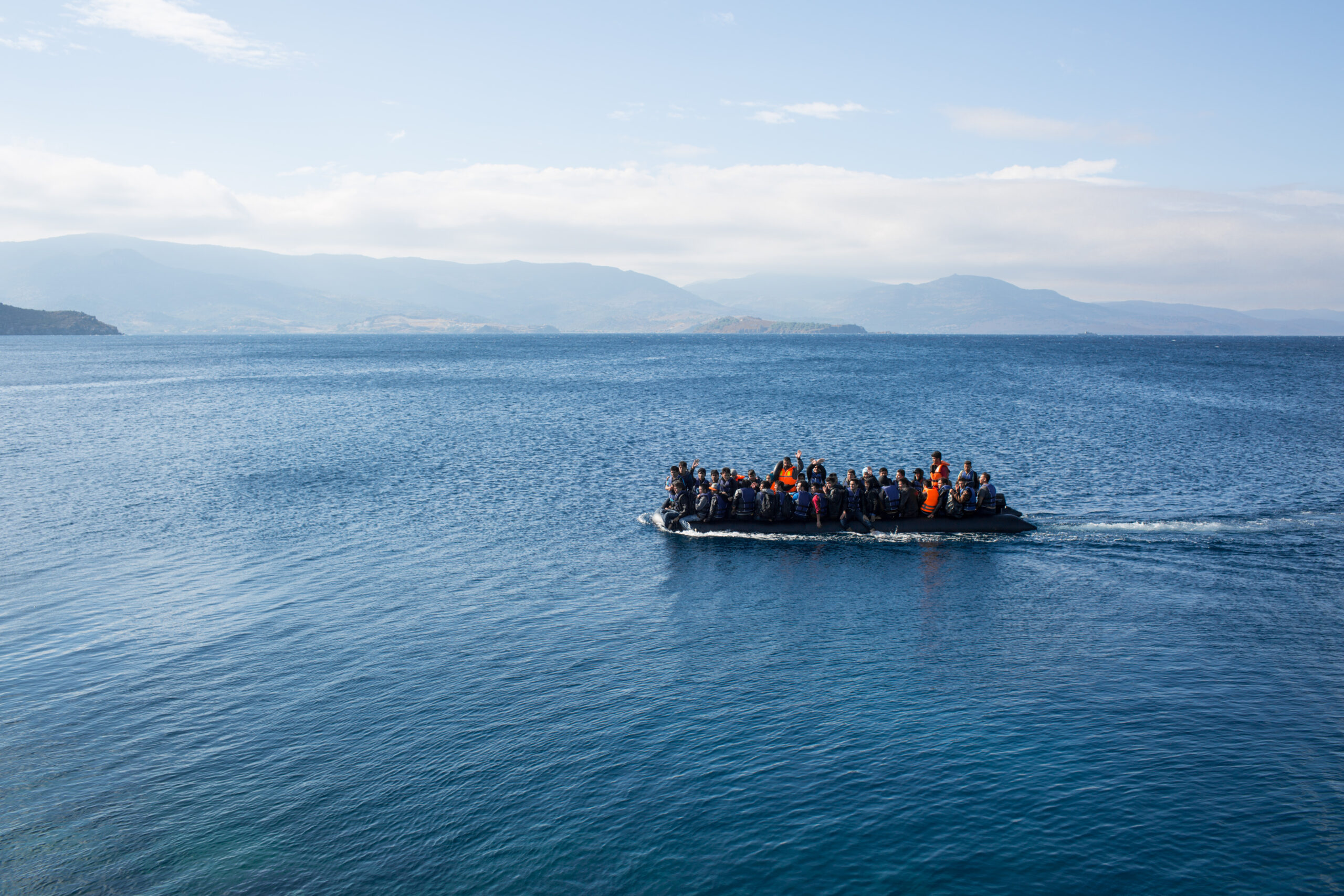
Ships may also take on refugees, for example because you see them at sea on an unsafe vessel. You may need to pick up hundreds at once. This is a different situation, they don’t need to hide anything.
“Make sure boarding arrangements are safe, have lifesaving arrangements, board women and children first, and one at a time,” Mr Rapley said.
“Check their possessions, you don’t want people coming on with lighters or matches if it is a tanker. You don’t want knives or guns. Move them away from boarding to a safe area. Secure the bridge and the engine room. Several hundred people roaming around [can be] very difficult to control.”
“Keep authorities, managers, charterers fully informed,” he said.
“We recommend you don’t take photos or videos of refugees. There’s been cases where they take offence. If you are 25 crew and have 200 refugees, that’s a difficult situation to be in.”
“If conditions are too dangerous, speak to authorities. If you think the vessel is not safe to take them onboard, talk to authorities. Keep detailed records in the logbook.”
McAuslands perspective
Michael Robertson, senior marine consultant with Van Ameyde McAuslands, agreed that the biggest risk area in the world for stowaways is the African continent.
“Tanzanian and Kenyan nationals regularly seek passage to the Red Sea, Gulf and Far East,” he said.
Van Ameyde McAuslands is a marine surveying and consultancy firm which can assist to resolve stowaway and refugee cases, including working for insurers. Mr Robertson leads its “crew care” team, which handles a wide variety of claims.
The big challenge for the shipping company is working out how stowaways can be discharged, he said.
In Far East ports, cases “are notoriously difficult to resolve,” he said.
“There’s been little willingness to assist, authorities choose to look the other way, leaving the shipowner and [P&I] clubs members to fend for themselves.”
The UK is fining shipping companies £2000 per stowaway, and this is likely to increase in 2023, he said. The UK has also been refusing entry to stowaways. A similar picture is happening in other European ports.
This means that stowaways “spend extended time onboard vessels,” until reaching a port willing to accept them, he said. The vessel is blamed for having poor security.
“Stowaways can become so frustrated at their situation that they become aggressive,” he said.
Although people often have “rather high expectations” of the reception they are going to get in Europe.
If a consulate or embassy is willing to provide travel documents to enable them to leave the ship, then the next question is whether they are willing to do this on the basis of a phone interview, or insist on a face to face interview, which may be possible to arrange, he said.
You may need to hire security escorts to make sure the person leaving the ship goes where they are supposed to.
Many stowaways try to hide their nationality or use false documentation.
“Stowaways seek to assume a nationality in hope of gaining sympathy from an immigration official during the interview process,” he said.
Deterrence
The International Ship and Port Security (ISPS) code, introduced after the Sept 11 2001 attacks to prevent terrorism, “is adhered to quite closely in some parts of Europe,” he said. This will make it much harder for someone unauthorised to get to the vessel’s berth.
“In my opinion, the code has improved general security, but there remain areas where it appears that governments are not investing enough in security of ports, particularly on the African continent,” he said. “Stowaways take advantage of the lack of security, particularly during the night-time period.”
Mr Robertson recommends that security guards should wear high visibility clothing, so they can be easily seen by stowaways and act as a deterrent.
“On one ship, there was a board [on the berth] saying, ‘next port Vladivostok,”‘ he said.
Claims handling
Britannia is currently seeing about 22 stowaway insurance claims a year, and 8 claims for saving refugees at sea, from its members. The biggest refugee claim was for 300 people in a single case.
Insurers can pay expenses “necessarily incurred in maintaining, landing, deporting or repatriating stowaways or persons saved at sea, including diversion expenses,” said Ilka Beck, associate director of the “People Risk” team at Britannia.
Costs recoverable from insurers can include costs of vessel diversion, security guards, food, warmer clothes, personal hygiene products, medical attention, and fines.
Once stowaways have been discovered onboard, they pose a security risk to the crew. “They need to be put into secure accommodation to keep crew safe,” she said.
Ms Beck gave an example of a stowaway who was onboard one vessel for 7 months in the Covid period, from May 2020 to December 2020. The shipping company tried to disembark the person in 23 different countries. Covid travel restrictions and lack of flights added to the problem.
The person, a national of Central African Republic, boarded the vessel in Douala, Cameroon, disguised as a stevedore, and so was not found by security guards with dogs. At the next port, in Brazil, no-one was able to leave the ship at all.
The ship then went to Europe, and security guards were taken onboard in Gibraltar, who were themselves unable to leave the ship for 5 months. “They were not happy, and very costly,” she said.
The ultimate cost paid by insurer was “just under $550k.”
There are many different authorities which need to be involved. As well as immigration and embassies, you involve airlines, airport authorities and health authorities.
It may be worthwhile for the shipowner to send the vessel back to the embarkation port. Despite the initial costs in ship time, it will save much trouble later, she suggested.
For refugees, the situation is different, because of obligations by countries to accept them under international agreements, and they do not need travel documents to claim asylum. The biggest spending made by the shipowner, and later claimed back from the insurer, could be for purchasing food.